
Human Generated Data

Title

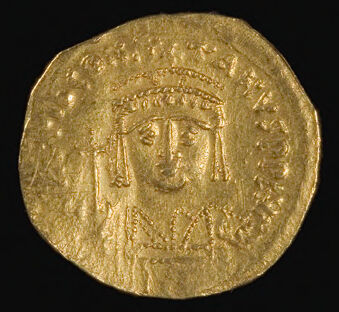
Coin of Tiberius II

Date

579-582 CE

People

Coin Constituent: Tiberius II, Byzantine r. 578 - 582 CE

Classification

Coins

Credit Line

Harvard Art Museums/Arthur M. Sackler Museum, Bequest of Thomas Whittemore, 1951.31.4.635

Human Generated Data

Title

Coin of Tiberius II

People

Coin Constituent: Tiberius II, Byzantine r. 578 - 582 CE

Date

579-582 CE

Classification

Coins

Credit Line

Harvard Art Museums/Arthur M. Sackler Museum, Bequest of Thomas Whittemore, 1951.31.4.635

Machine Generated Data

Tags

Amazon
created on 2022-05-10

Coin 97.9
Money 97.9
Nature 94
Outdoors 94
Astronomy 94
Night 94
Outer Space 94
Universe 94
Space 94
Nickel 91.9
Gold 81.4

Clarifai
created on 2023-10-17

no person 99.6
one 98.7
money 98
wealth 97.9
currency 97.8
metalwork 95.3
isolate 95
business 91.2
finance 91.2
retro 89.3
change 88.7
cash 88.4
sculpture 88
two 87.7
isolated 87.1
five 86.3
luck 86.2
ancient 84.6
value 84.4
copper 83.2

Imagga
created on 2022-05-10

ingot 100
block 77.5
currency 54.9
coin 54.5
money 53.7
coins 42.6
finance 38.9
cash 36.7
banking 35.9
bank 34.1
brass 27.5
old 25.1
pay 25
object 25
close 24.6
collection 23.5
metal 23.4
memorial 22.1
historical 20.8
round 20.7
financial 20.5
collect 19.7
retro 18.9
one 18
numismatics 17.8
silver 17.7
moon 17
economy 16.7
circle 16.4
exchange 16.3
vintage 15.8
business 14.6
structure 14.5
wealth 14.4
earth 13.7
circular 12.7
finances 12.5
change 12.5
ancient 12.1
associated 11.9
association 11.8
definition 11.8
advertise 11.7
advertisement 11.6
advertising 11.5
conceptual 11.5
black 11.4
cloud 11.2
bowl 11.2
globe 11.1
cover 11.1
shiny 11.1
ruble 10.9
ellipse 10.9
copper 10.8
ball 10.7
backdrop 10.7
night 10.7
decor 10.6
creative 10.6
form 10.2
decorative 10
element 9.9
antique 9.9
pound 9.7
rust 9.7
planet 9.6
icon 9.5
closeup 9.4
commerce 9.4
global 9.1
art 9.1
gold 9.1
design 9
amulet 8.9
market 8.9
penny 8.9
cent 8.9
monetary 8.8
astronomy 8.8
decoration 8.7
savings 8.4
dollar 8.4
dark 8.4
full 8.2
symbol 8.1
reverse 7.9
two 7.6
buy 7.5
charm 7.1

Google
created on 2022-05-10

Currency 85.9
Artifact 84.6
Coin 84.2
Money 83.4
Amber 80
Circle 76.9
Font 75.9
Metal 71.3
Nickel 68.6
Collectable 66.4
History 66.1
Bronze 61.6
Ancient history 60.8
Antique 57.3
Gold 53.4
Brass 52.9

Microsoft
created on 2022-05-10

coin 99.2
invertebrate 90.4
gold 85.2
bronze 85
metal 81.2
currency 79.6
text 79.2
money 77
black 72.7
brass 68.1
cash 67.4
money handling 64.7
mint 64.4
nickel 60.4
dark 47.5

Color Analysis

Feature analysis

Amazon
Moon

Clarifai

Coin

AWS Rekognition

Moon 94%

AWS Rekognition

Moon 80.2%

Clarifai

Coin 98.5%

Clarifai

Coin 97.8%

Categories

Imagga
created on 2022-05-10

paintings art 99.9%

Captions

Microsoft
created by unknown on 2022-05-10

a close up of a coin 85.7%
a coin in a dark room 74.6%
close up of a coin 74.5%

Clarifai

No captions written

Salesforce

Created by general-english-image-caption-blip on 2025-06-12

a photograph of a gold coin with a crown on it

Created by general-english-image-caption-blip-2 on 2025-06-29

two gold coins with the image of a woman and a man

OpenAI GPT

Created by gpt-4o-2024-11-20 on 2025-06-13

This image shows both sides of a gold coin, likely of Byzantine origin. On the left side (the obverse), there is an intricate depiction of a human figure wearing ceremonial robes, possibly an emperor or religious leader. The figure is crowned and facing forward, surrounded by an inscription in a circular arrangement.

On the right side (the reverse), a cross is prominently displayed above a stepped base, symbolizing Christianity. It is also encircled by text. The coin is set against a black background, and a scale in centimeters is visible on the right-hand side for size reference.

Created by gpt-4o-2024-08-06 on 2025-06-13

The image shows a gold coin on a black background, with both the obverse and reverse sides visible. On the left side is the obverse, which features a portrait of Byzantine Emperor Constans II. The emperor is depicted with a frontal pose, wearing a crown and ornate robes, likely adorned with pearls or jewels. There is a circular inscription around the portrait, typical of Byzantine coinage, though the specific text is not clearly legible in the image.

On the right side is the reverse of the coin, which displays a cross potent set on steps, a common motif in Byzantine iconography. There is also an inscription around the cross, but like the obverse, the text is difficult to read. The coin is likely a solidus, a gold coin used widely in the Byzantine Empire, and produced during the reign of Constans II, who ruled from 641 to 668 AD.

The scale bar to the right of the coins indicates the size in centimeters, providing a sense of the coin's dimensions. The broad, flat design and intricate details are characteristic of Byzantine imperial coinage.

Anthropic Claude

Created by anthropic.claude-3-haiku-20240307-v1:0 on 2025-06-18

The image shows two sides of a gold coin. On one side, there is a portrait of a figure wearing a crown or headdress. On the other side, there appears to be some text or symbols, though I cannot make out the specific details. The coin has an antique, historical appearance.

Created by us.anthropic.claude-3-5-sonnet-20241022-v2:0 on 2025-06-18

This image shows an ancient gold coin photographed against a black background with a measurement scale on the right side. The coin appears to be well-preserved and has visible inscriptions or designs on its surface. It looks like it could be from an Islamic or Middle Eastern origin, based on what appears to be Arabic script visible on the coin. The coin is oval-shaped and has a somewhat worn but still distinguishable relief pattern. The gold color is quite prominent, suggesting it's made of high-purity gold. The scale on the right indicates this is likely a professional or archaeological photograph meant to document the artifact.

Meta Llama

Created by us.meta.llama3-2-11b-instruct-v1:0 on 2025-06-14

The image presents a gold coin, likely from the Byzantine Empire, against a black background. The coin is positioned centrally, with its front and back sides visible.

Front Side:

  • The front side of the coin features an image of a man's head, adorned with a crown or headdress.
  • The man's face is depicted in profile, facing left.
  • The inscription "ANASTASIOS" is visible above the man's head, while "ROMAE" is written below.

Back Side:

  • The back side of the coin displays a cross on a pedestal, surrounded by an inscription that reads "AVG" at the top and "CONOB" at the bottom.
  • The cross is depicted in a simple, yet elegant design.

Additional Details:

  • A ruler is placed to the right of the coin, indicating its size.
  • The background of the image is solid black, which helps to highlight the coin's details.

Overall, the image provides a clear and detailed view of the gold coin, showcasing its intricate design and historical significance.

Created by us.meta.llama3-2-90b-instruct-v1:0 on 2025-06-14

The image presents a gold coin with an embossed design, featuring two distinct sides. The left side of the coin showcases a portrait of a person adorned with a crown, while the right side displays a cross surrounded by text. The coin is set against a black background, accompanied by a ruler on the right side that measures its size in centimeters.

Key Features:

  • Coin Design: The coin boasts an embossed design, with a portrait on one side and a cross on the other.
  • Portrait Side: The left side of the coin features a portrait of a person wearing a crown.
  • Cross Side: The right side of the coin displays a cross surrounded by text.
  • Background: The coin is set against a black background.
  • Ruler: A ruler is placed on the right side of the image, measuring the coin's size in centimeters.

Conclusion:

The image provides a detailed view of a gold coin with an embossed design, featuring a portrait and a cross. The coin's size is measured using a ruler, which adds context to the image. Overall, the image offers a clear and concise representation of the coin's design and features.

Amazon Nova

Created by amazon.nova-lite-v1:0 on 2025-06-13

The image displays two gold coins on a black background, with a ruler marked in centimeters on the right side. The coin on the left features a portrait of a crowned figure, likely a Byzantine emperor, with intricate details on the clothing and headdress. The coin on the right has a cross in the center, surrounded by Greek text, and a circular border with additional inscriptions. The coins appear to be well-preserved, with some wear and scratches visible on the surface.

Created by amazon.nova-pro-v1:0 on 2025-06-13

The image shows two gold coins on a black background. The coins are ancient and appear to be from the Byzantine Empire. The left coin has a profile of a man's head, while the right coin has a cross in the center with some text around it. The coins are placed side by side, with a ruler on the right side to indicate their size.

Google Gemini

Created by gemini-2.0-flash on 2025-06-13

The image shows two sides of an ancient-looking gold coin. The coin is presented against a black background, with a centimeter ruler visible on the right side for size reference.

The coin appears worn, with some imperfections and signs of age. One side of the coin features a stylized portrait of a person wearing a headdress or crown. The portrait is surrounded by an inscription in a circular pattern.

The other side of the coin features a cross as the central design. Below the cross, there appears to be another inscription. The word "CONOB" is visible at the bottom of this side.

Created by gemini-2.0-flash-lite on 2025-06-13

The image shows two gold coins, likely ancient or antique artifacts, placed against a stark black background. Both coins are circular and of a similar size, appearing to be made of gold due to their color and shine.

The coin on the left displays a portrait of a person, possibly a ruler or dignitary, with a crown or ornate head covering. The face is detailed, and there are inscriptions along the coin's perimeter.

The coin on the right has a cross symbol in the center, which is a common design element in various cultures. There are also inscriptions around the cross. Some wear or imperfections can be seen on both coins, indicating their age. A ruler in centimeters is positioned along the side of the image.

Mistral Pixtral

Created by us.mistral.pixtral-large-2502-v1:0 on 2025-06-13

The image shows two sides of a gold coin from the Byzantine Empire. Here is a detailed description:

  1. Obverse (Left Side):

    • The obverse side features a bust of a bearded man wearing a crown and imperial regalia, likely representing a Byzantine emperor.
    • The man is depicted in profile, facing right.
    • There is an inscription around the bust, but the exact words are not entirely clear due to wear and the image's resolution.
  2. Reverse (Right Side):

    • The reverse side displays a cross potent (a cross with crossbars at the ends of the arms) on three steps.
    • There is an inscription around the cross, which is typical of Byzantine coinage.
    • The legend on the reverse is partially legible and appears to include the letters "CONOB," which is a common mint mark indicating the coin was minted in Constantinople.
  3. General Characteristics:

    • The coin is made of gold, which is typical for Byzantine solidi.
    • The edges of the coin are slightly irregular, indicating it might have been hand-struck.
    • There is a scale on the right side of the image, showing the coin's size, which appears to be around 2 cm in diameter.

This type of coin was commonly used in the Byzantine Empire for trade and as a symbol of imperial authority. The imagery and inscriptions are consistent with Byzantine numismatic traditions.

Qwen

Created by Qwen/Qwen2.5-VL-7B-Instruct on 2025-07-06

The image shows two sides of a gold coin, likely of historical significance. The coin appears to be from the Byzantine Empire, given the inscription and design styles.

  • Obverse (Front Side): The coin features a portrait of a seated figure, which is likely a depiction of the emperor, flanked by the symbols of the emperor's authority and virtues. The inscription around the edge is in Greek, which was a common language in the Byzantine Empire.

  • Reverse (Back Side): The reverse side has a cross and an inscription that provides information about the coinage, including the emperor's name and the weight or value of the coin. The Greek inscription "ΤΑΣ" is visible, which likely refers to the name of the emperor or the period.

The coin is placed against a black background, and a scale is visible on the right side, indicating the size of the coin in centimeters. The coin's surface shows signs of wear, which is typical for an artifact of historical origin.

Created by Qwen/Qwen2.5-VL-72B-Instruct on 2025-07-06

This image shows two sides of an ancient gold coin, likely from the Byzantine Empire, based on the style and inscriptions.

  • Left Side (Obverse): The obverse features a depiction of a crowned figure, possibly an emperor or a religious figure. The figure is shown facing forward, with a cross above the head and inscriptions around the edge of the coin. The inscriptions appear to be in Greek, which was commonly used in Byzantine coins.

  • Right Side (Reverse): The reverse side displays a cross on a pedestal, a common symbol in Byzantine coinage. There are also inscriptions around the edge, again likely in Greek. The word "CONOB" is visible, which is an abbreviation for "CONstantinOPOLis," indicating that the coin was minted in Constantinople.

The coin is shown against a black background, and there is a scale on the right side of the image indicating the size of the coin in centimeters. The coin appears to be well-preserved, with clear details and inscriptions.

Text analysis

Amazon

cm
f
CONOR
CONOR JAN
JAN
or'a
the

Google

cm
cm